A realistic budget to open a de novo dental practice in the United States runs $420,000 to $1.1 million, with most general practitioners landing near $650,000-$700,000 for a 3-4 operatory startup, as of September 2026. Build-out and equipment together typically account for 55-65% of the total, and the single biggest driver of the spread isn’t the chair you choose. It’s your market’s real estate cost per square foot, whether you’re building into a cold shell or second-generation dental space, and how many months of working capital you carry before the schedule fills. Dentists who open with less than four to six months of operating expenses in reserve are the ones who show up in the “needed emergency funding in year one” statistics. This guide breaks down every cost category, the current build-out and equipment ranges, how to finance the gap, a month-by-month timeline, and an 8-step process for building your own startup budget.

What Does It Cost to Open a Dental Practice in 2026?
Opening a dental practice from scratch (a “de novo” startup, as opposed to buying an existing office) means funding every line item yourself: the space, the equipment, the software, the staff, and enough cash reserve to survive the ramp-up period before patient volume covers overhead. There is no acquired patient base and no existing collections history, which is exactly why de novo startups need more working capital relative to total cost than an acquisition does.
The table below is DPI’s editorial synthesis of published 2025-2026 guidance from dental-specific lenders, construction cost trackers, and practice-transition consultants (sources cited throughout). Every figure is a range, not a point estimate, because build-out cost per square foot alone can vary by more than 2x between a low-cost secondary market and a major metro.
| Cost Category | Low | Typical | High |
|---|---|---|---|
| Build-out / construction | $100,000 | $180,000 | $320,000 |
| Equipment (chairs, sterilization, imaging) | $140,000 | $220,000 | $320,000 |
| Technology & practice management software setup | $12,000 | $22,000 | $35,000 |
| Initial clinical & office supplies | $12,000 | $20,000 | $32,000 |
| Working capital reserve (4-6 months) | $80,000 | $130,000 | $200,000 |
| Professional fees (architect, attorney, CPA) | $18,000 | $30,000 | $50,000 |
| Licensing, permits & entity formation | $5,000 | $10,000 | $18,000 |
| Pre-launch marketing | $8,000 | $15,000 | $28,000 |
| Contingency (~9-10%) | $40,000 | $65,000 | $110,000 |
| Total | ~$415,000 | ~$692,000 | ~$1,113,000 |
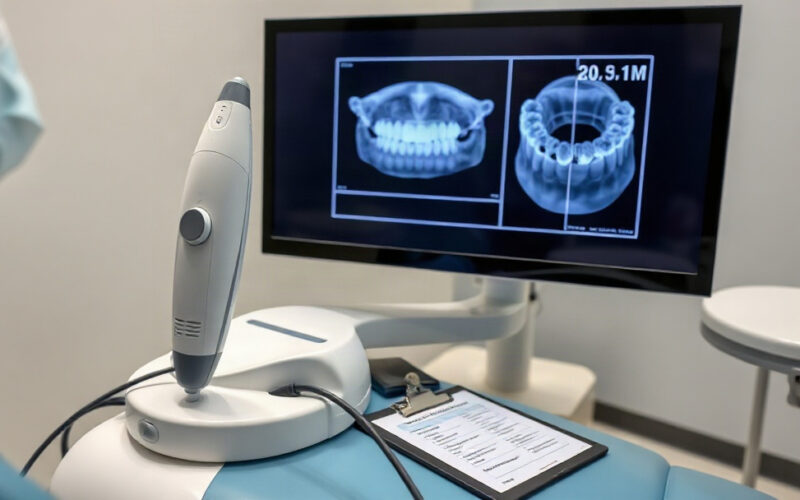
CBCT imaging is not included above. It’s an optional add of roughly $75,000-$150,000 for practices that want in-house 3D imaging at launch rather than referring out or adding it later, most single-doctor GP startups defer this purchase until case volume justifies it.
These numbers track closely with published industry guidance: dental transition consultancy Breakaway Practice’s 2025 dental startup cost breakdown puts total de novo capital requirements at $500,000-$750,000, with equipment representing 40-50% of the investment, consistent with the split above. DPI editorial estimate as of September 2026; confirm current pricing with your equipment rep and general contractor before finalizing a loan request.
Build-Out Cost Per Square Foot: Shell Space vs. Second-Generation Dental Space
A general dentistry startup with 3-4 operatories typically needs 1,600-2,200 square feet. Within that footprint, the single biggest cost lever is what condition the space is in when you sign the lease.
Cold Dark Shell
A cold shell has no plumbing, electrical, or HVAC roughed in for dental use. You’re building from bare concrete and studs, which gives full design control but runs $180-$350 per square foot for a complete dental build-out (construction only, before equipment) and typically adds 4-8 weeks to your permitting-to-completion timeline versus second-generation space. DPI editorial estimate as of September 2026, synthesized across multiple 2026 dental construction cost guides; get a written bid from a contractor with dental-specific build experience before budgeting against this range: medical-grade HVAC, vacuum lines, and lead-lined walls for X-ray rooms are line items a generalist contractor will underprice.
Second-Generation (“2nd Gen”) Dental Space
Space previously built out for another dental or medical tenant already has plumbing rough-in, vacuum lines, and electrical sized for clinical equipment. That typically saves $50-$80 per square foot versus a cold shell, landing total construction cost closer to $100-$220 per square foot, depending on how much of the existing layout you keep versus reconfigure. If you can find a 2nd gen space in your target location, it is very often the single fastest lever to bring total startup cost down without touching your equipment list.
Market Tier Matters as Much as Space Condition
The ranges above swing by market: a build-out in a lower-cost secondary market can land at the bottom of both ranges, while dense coastal metros with higher labor and permitting costs regularly push cold-shell builds toward $350+/sqft. Get at least three contractor bids and confirm what’s included. Some quotes cover core-and-shell finish only and exclude cabinetry, plumbing fixtures, or low-voltage/data wiring, which then reappear as change orders during construction.
Equipment: New vs. Refurbished, Lease vs. Buy
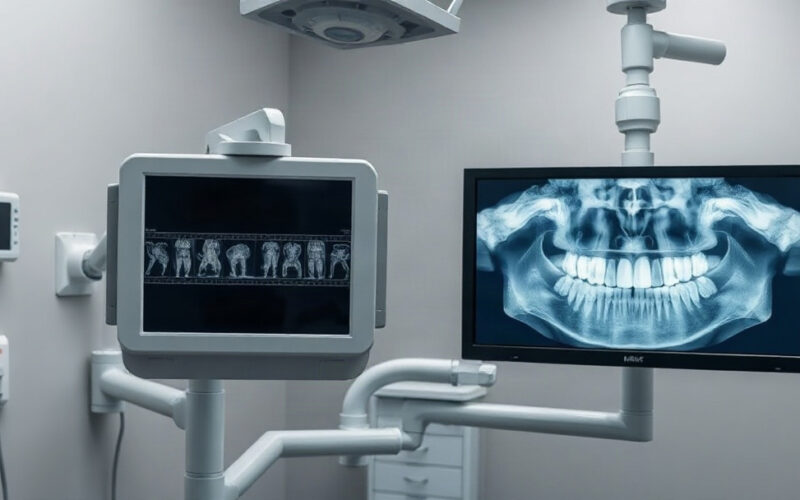
A complete operatory (chair, delivery unit, patient monitoring) runs roughly $45,000-$65,000 new per chair; digital radiography (sensors, pano, or pano/ceph combo units) adds $35,000-$50,000; and sterilization center equipment (autoclaves, ultrasonic cleaners, instrument processing) typically runs $15,000-$25,000 for a startup-sized office. DPI editorial estimate as of September 2026, based on published equipment-category pricing from dental construction and startup cost guides; confirm current list pricing with vendors like A-dec, Midmark, Planmeca, and Dentsply Sirona, since pricing moves with tariffs and supply costs.
Refurbished Equipment
Refurbished operatory packages from certified dealers can cut equipment spend by 30-50% versus new, and are a common way startups fund a 4th operatory as “shell” (plumbed and wired, chair added later) without financing equipment that won’t generate revenue on day one. The tradeoff is a shorter remaining service life and a narrower warranty, which matters if you’re financing the equipment over 7-10 years through the same loan as your build-out.
Lease vs. Buy Math
Equipment leasing preserves cash at open, the period when you need it most, but typically costs more over the life of the equipment than financing a purchase through an SBA 7(a) loan or dental-specific equipment lender, because lease rates run above loan APRs and you don’t build equity in the asset. Most de novo practices are better served financing equipment inside the same SBA 7(a) package used for build-out, since blended underwriting on one loan is usually cheaper than stacking a separate equipment lease on top. For the mechanics of financing options and Section 179 depreciation timing, see DPI’s dental equipment financing guide.
Working Capital: How Much Reserve a Startup Actually Needs
Undercapitalized working capital is consistently cited by dental transition consultants as the top reason de novo practices struggle in year one, not a bad location, not the wrong equipment, but running out of cash before the schedule fills. Most startups don’t reach positive monthly cash flow for 4-8 months after opening, depending on the market and how aggressive the pre-launch patient acquisition plan is, which means your working capital reserve needs to cover payroll, rent, loan payments, and supplies during that entire ramp-up window, not just “a few months of cushion.”
The standard guidance across dental-specific lenders and consultants is to reserve 4-6 months of full operating expenses: for a typical two-to-three-operatory startup running $35,000-$45,000 in monthly overhead, that’s the $130,000-$200,000 range shown in the cost table above. This is separate from your build-out and equipment budget; treating working capital as an afterthought funded out of “whatever’s left over” is the single most common structural mistake in de novo financing. Consultants including Breakaway Practice report that new practice owners frequently need supplemental funding in the first 12-18 months specifically because working capital was underbuilt at the financing stage, reconfirm current figures with your own lender, since this is reported industry experience rather than a single standardized statistic.
Financing the Startup: SBA 7(a), Equipment Financing, and ROBS
Most de novo dental startups are financed through an SBA 7(a) loan, which as of 2026 tops out at $5 million per loan with rates typically running prime + 2.75% (roughly 11.25% mid-2026) and down payments as low as 10% for well-qualified borrowers, though startups without an operating history often see lenders require 15-20% down or additional collateral until the practice stabilizes, a meaningfully different risk profile than an acquisition with two years of tax returns behind it. SBA 504 loans can fix the real estate portion of a build-out at a lower rate if you’re purchasing (not leasing) your space. Dental-focused lenders including Live Oak Bank, Bank of America Practice Solutions, and Provide underwrite a high volume of these loans specifically because they understand dental collections and overhead benchmarks well enough to lend against a startup’s projected cash flow rather than existing revenue.
Dentists with $200,000+ in qualified retirement assets sometimes use a ROBS (Rollover for Business Startups) structure to fund part of the equity injection without taking on new personal debt or triggering early-withdrawal penalties. It’s a more complex structure with real compliance obligations, so it’s worth review with a CPA who has set one up before, not just a general accountant.
For overhead context once you’re open, see DPI’s dental office overhead breakdown and overhead benchmarks guide, both show where the monthly number your working capital reserve needs to cover actually comes from.
Timeline: Lease Signing to First Patient
A de novo dental startup typically takes 10-14 months from lease signing to opening day, longer in markets with slow permitting or if you’re building into a cold shell rather than second-generation space.
| Month | Milestone |
|---|---|
| 1-2 | Business plan finalized, site selected, lease negotiated |
| 2-3 | Financing application submitted, entity formed, CPA and dental-specific attorney engaged |
| 3-5 | Architect drawings finalized, permits submitted |
| 4-9 | Construction and build-out (2nd gen space trends toward the shorter end, cold shell toward the longer end) |
| 5-9 | Insurance credentialing applications submitted (start this early. Some plans take 90-120 days) |
| 7-9 | Equipment ordered and installed |
| 8-10 | Staff hired and trained, PMS and software configured |
| 9-12 | Pre-launch marketing campaigns active, soft opening |
| 10-14 | Grand opening and full patient acquisition push |
Insurance credentialing is the timeline item most startups underestimate. Begin it the moment your entity and NPI are established, not after construction finishes. A practice that’s fully built out but not yet credentialed with major plans is losing weeks of billable schedule for a paperwork delay that was avoidable.
How to Build Your Dental Practice Startup Budget
- Define your footprint and market tier first. Square footage and local build-out cost per square foot drive more of your total budget than any single equipment decision, so lock in a realistic space size (1,600-2,200 sqft for a 3-4 operatory GP startup) and get local cost-per-square-foot data before estimating anything else.
- Get three contractor bids on the actual space, not a generic estimate. Confirm whether each bid includes dental-specific plumbing, vacuum lines, medical-grade HVAC, and lead-lined X-ray room walls, or whether those will come back as change orders.
- Build your equipment list by operatory, not as a lump sum. Decide new vs. refurbished per chair, and separate “day one” equipment from equipment you’ll add once volume justifies it (CBCT is the most common deferral).
- Calculate working capital as its own line item, never as leftover cash. Multiply your projected monthly overhead by 4-6 months, not by however much is left after build-out and equipment are funded.
- Add professional fees and licensing as real budget lines. Architect, dental-specific attorney, CPA, entity formation, and state dental board facility registration fees are small individually but commonly get left out of first-draft budgets entirely.
- Build in a contingency of at least 8-10% of total project cost. Construction change orders and equipment price movement are the norm, not the exception, in dental build-outs.
- Match your financing structure to the budget, not the other way around. Decide whether an SBA 7(a) loan, SBA 504 for the real estate portion, or a ROBS-funded equity injection fits your capital stack before you’re mid-negotiation with a lender.
- Stress-test the budget against a slow ramp-up. Model your cash position if you don’t reach breakeven until month 10 instead of month 6. If that scenario runs your working capital to zero, the budget needs more reserve before you sign a lease, not after.
Dental Practice Startup Cost Data (2026)
| Cost Category | Low | Typical | High |
|---|---|---|---|
| Build-out / construction | $100,000 | $180,000 | $320,000 |
| Equipment (chairs, sterilization, imaging) | $140,000 | $220,000 | $320,000 |
| Technology & PMS setup | $12,000 | $22,000 | $35,000 |
| Initial supplies | $12,000 | $20,000 | $32,000 |
| Working capital reserve (4-6 months) | $80,000 | $130,000 | $200,000 |
| Professional fees | $18,000 | $30,000 | $50,000 |
| Licensing & permits | $5,000 | $10,000 | $18,000 |
| Pre-launch marketing | $8,000 | $15,000 | $28,000 |
| Contingency | $40,000 | $65,000 | $110,000 |
| Total | ~$415,000 | ~$692,000 | ~$1,113,000 |
Frequently Asked Questions
How much does it cost to start a dental practice in 2026?
A de novo dental practice typically costs $420,000 to $1.1 million to open in 2026, with most general practitioners landing near $650,000-$700,000 for a 3-4 operatory startup. Build-out and equipment together make up 55-65% of the total, with the rest split between working capital reserve, technology, professional fees, licensing, and pre-launch marketing.
What is the average cost per square foot to build out a dental office?
Construction-only build-out cost runs $180-$350 per square foot for a cold dark shell and $100-$220 per square foot for second-generation dental space that already has plumbing and electrical roughed in for clinical use. Market tier and finish level move both ranges a great deal.
How much working capital does a new dental practice need?
Most dental-specific lenders and transition consultants recommend reserving 4-6 months of full operating expenses as working capital, separate from build-out and equipment budgets. For a typical startup running $35,000-$45,000 in monthly overhead, that’s roughly $130,000-$200,000 held in reserve before opening.
Is it cheaper to buy an existing dental practice or start one from scratch?
Buying an existing practice is usually cheaper upfront and cash-flow-positive from day one because it comes with an existing patient base and collections history, while a de novo startup requires full working capital reserve to cover a 4-8 month ramp to positive cash flow. Starting from scratch gives full design and culture control and stronger long-term equity upside in growing markets, at the cost of higher startup risk and a longer path to breakeven.
How much does dental equipment cost for a new practice?
A complete new operatory (chair, delivery unit, patient monitoring) runs $45,000-$65,000, digital radiography adds $35,000-$50,000, and sterilization center equipment adds $15,000-$25,000. Refurbished equipment can cut these figures by 30-50%, and CBCT imaging, if added at launch, typically runs an additional $75,000-$150,000.
What SBA loan is best for a dental practice startup?
An SBA 7(a) loan is the most commonly used financing tool for dental startups, with amounts up to $5 million, rates typically around prime + 2.75% (roughly 11.25% as of mid-2026), and down payments as low as 10% for well-qualified borrowers, though startups without operating history often see lenders require 15-20% down. An SBA 504 loan can be used alongside it to fix the real estate portion at a lower rate if you’re purchasing your space.
How long does it take to open a dental practice from lease signing?
A de novo dental startup typically takes 10-14 months from lease signing to opening day, depending on whether you’re building into second-generation space or a cold shell, and how quickly your market’s permitting office moves.
What is the biggest financial mistake dentists make when starting a practice?
Underbuilding working capital is the most commonly cited mistake among dental transition consultants. Practices that fund build-out and equipment fully but treat working capital as “whatever’s left over” are the ones most likely to need emergency funding in their first 12-18 months.
Do I need a CBCT machine to open a dental practice?
No. Most single-doctor general practice startups defer CBCT (cone beam computed tomography) purchase until case volume justifies the $75,000-$150,000 investment, referring out for 3D imaging in the meantime rather than financing it as part of the initial startup budget.
How much should I budget for professional fees when starting a dental practice?
Budget $18,000-$50,000 for architect, dental-specific attorney, and CPA fees combined, plus a separate $5,000-$18,000 for licensing, permits, and entity formation. These are frequently underestimated in first-draft startup budgets because they’re spread across many smaller invoices rather than one line item.
Can I use my 401(k) to fund a dental practice startup?
Yes, through a ROBS (Rollover for Business Startups) structure, which lets dentists with $200,000+ in qualified retirement assets fund part of their equity injection without new personal debt or early-withdrawal penalties. It requires a compliant C-corp structure and ongoing administration, so it should be set up with a CPA experienced in ROBS specifically.
Is a de novo dental practice a better investment than acquiring one?
It depends on your market and risk tolerance. A de novo startup builds equity from a clean slate with no inherited problems, but takes longer to reach positive cash flow and carries more execution risk. A detailed return-on-investment comparison between building from scratch and acquiring an existing practice is planned as a future DPI guide.
Related Resources
This is the anchor post in DPI’s new startup and de novo practice cluster. Additional spokes covering equipment procurement deep-dives and staffing ramp-up are in planning.
For financing and overhead context already live on DPI:
- Dental Practice Loans: SBA 7(a), 504 & Conventional Financing: full comparison of loan products and current rates
- Dental Equipment Financing: lease vs. loan math and Section 179 timing
- Dental Practice Loan Refinance: when it pays to refinance startup debt once you’re stabilized
- ROBS (401k Rollover) for Dental Practice Acquisition: using retirement funds for equity without new debt
- Dental Office Overhead Breakdown: where the monthly number your working capital reserve needs to cover actually comes from
- Dental Practice Overhead Benchmarks: typical/good/great overhead ranges once you’re open
- Dental Practice Benchmark Scorecard: 12 metrics to track once your startup is generating data
Last updated: September 5, 2026. Cost figures are DPI editorial estimates synthesized from published 2025-2026 dental construction, equipment, and lending guidance as cited throughout this article; confirm current pricing with your own contractor, equipment vendor, and lender before finalizing a loan request.