Check your SBA eligibility in 60 seconds with our free tool, no lender contact required.
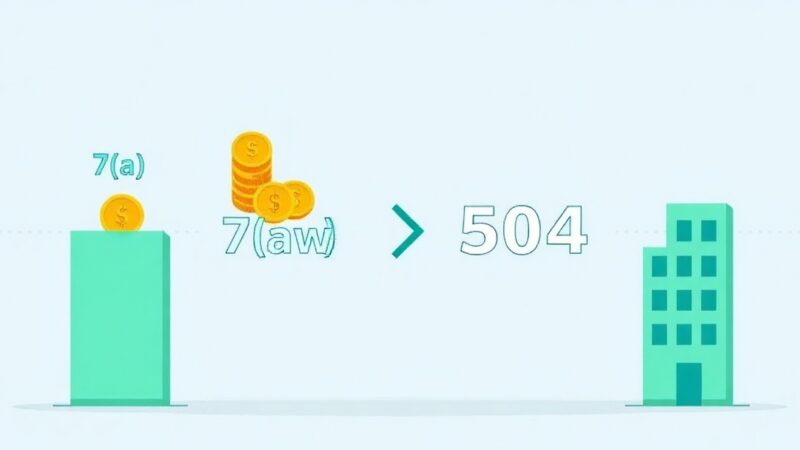
Most dentists shopping for acquisition financing hear “SBA loan” and assume there is one program. There are two, and choosing the wrong one can cost tens of thousands of dollars over the life of the loan. The SBA 7(a) and SBA 504 are structurally different products designed for different use cases. This guide puts them side by side with real dollar examples across four acquisition scenarios, so you can match the program to your deal before you talk to a lender. For the full SBA 7(a) approval process, see our guide to SBA 7(a) loans for dental practices. For the broader landscape of dental financing options, see dental practice loans.
2026 SBA rates at a glance
| Program | 2026 Interest Rate | Max Loan | Term | Best For |
|---|---|---|---|---|
| SBA 7(a) | Prime + 2.25%-2.75% (variable), as of Dec. 2025 ≈ 9.00%-9.50% | $5 million | Up to 25 years (real estate); 10 years (working capital, goodwill, equipment) | Acquisitions funding goodwill, working capital, or equipment, most dental practice purchases |
| SBA 504 | ~6.5%-7.0% fixed (CDC debenture), as of 2026 | $5.5 million (CDC portion; total project cost can be higher with the bank tranche) | 10, 20, or 25 years (fixed) | Deals that include a building purchase or major fixed-asset equipment |
Rates shown are indicative ranges as of 2026, based on SBA base lending guidelines and current prime/bond-market pricing. Actual rates vary by lender, credit profile, and loan size, confirm current terms with your SBA lender or at SBA.gov.
What’s the difference between SBA 7(a) and SBA 504 loans for dentists?
SBA 7(a) is a general-purpose government-guaranteed bank loan that can fund almost any legitimate business purpose: goodwill, equipment, working capital, leasehold improvements, and real estate all in a single loan. SBA 504 is a two-part financing structure specifically for fixed assets (real property and major equipment), paired with a Certified Development Company (CDC) that issues a long-term debenture at a fixed rate set by the bond market. The 504 cannot pay for goodwill or working capital at all. In dentistry, where 60-80% of a practice’s purchase price is goodwill, that distinction drives the decision for most buyers.
| Factor | SBA 7(a) | SBA 504 |
|---|---|---|
| What it can fund | Acquisition (goodwill + equipment + real estate + working capital) | Fixed assets only: real property and major equipment (≥10-year useful life) |
| Can it fund goodwill? | Yes | No |
| Can it fund working capital? | Yes | No |
| Primary lender | SBA-approved bank or credit union | Two lenders: bank (50%) + CDC (40%) + borrower down (10%) |
| Rate type | Variable (prime + lender spread) | Fixed (CDC debenture rate, set at bond pricing) |
| Best use for dentists | Practice acquisition (goodwill-heavy), working capital, equipment | Building purchase alongside a practice acquisition; major equipment ≥$150K |
Which SBA loan should a dentist choose for buying a practice?
Use SBA 7(a) if goodwill and intangible value make up the majority of the purchase price, which describes nearly every dental practice acquisition. Use SBA 504 only if you are simultaneously purchasing real estate or a qualifying piece of equipment (CBCT, digital chairside mill, cone beam system) and you want to lock in a fixed rate on that fixed-asset component. The 504’s fixed rate is its only advantage over the 7(a) for most dental buyers; if your deal does not involve a building purchase, the 7(a) almost always wins on flexibility.
The decision rule, applied to a $1.2M general practice acquisition:
- Goodwill = $840K, equipment = $180K, working capital = $180K: Use SBA 7(a). The 504 cannot touch goodwill or working capital, so it is not viable for this deal structure.
- Goodwill = $600K, equipment = $150K, building = $600K: Use a 504/7(a) combination, 7(a) for goodwill and working capital, 504 for the building. The fixed 504 rate locks in predictable building costs for 20-25 years.
- Equipment only ($400K CBCT + mill): 504 is viable here. But check conventional equipment financing first. Some dental equipment lenders beat both SBA programs on rate and speed for equipment-only deals. If your existing practice acquisition loan is above market rate, also consider whether refinancing a dental practice loan makes sense before layering additional equipment debt. The dental equipment financing guide covers 12 lenders, the lease-vs-buy math, and Section 179 timing for 2026.
For context on how the broader acquisition process fits together, see our dental practice acquisition checklist and the letter of intent guide: the LOI stage is where you lock in deal structure before the financing conversation begins. Dentists with substantial retirement savings may also consider a ROBS structure to fund the acquisition equity without a personal down payment loan.
SBA 7(a) vs 504: side-by-side program specs
Both programs are governed by SBA Standard Operating Procedure (SOP) 50 10 7, the current master rulebook for all SBA loan programs. The table below pulls the core specs from SOP 50 10 7 and current market data as of mid-2026. Rates are illustrative based on a WSJ prime rate of 6.75% (as of December 2025).
| Program Spec | SBA 7(a) | SBA 504 |
|---|---|---|
| Maximum loan amount | $5,000,000 | $5,000,000 (CDC debenture portion); total project can exceed $5M |
| Down payment (typical) | 10% (12.5-15% on goodwill-heavy deals) | 10% (borrower equity injection on total project) |
| Interest rate (mid-2026) | Variable: prime + 2.25-2.75% = approx. 9.00-9.50% | Fixed: CDC debenture rate approx. 6.5-7.0% (bank portion variable at ~prime+1.5%) |
| Term, personal property / goodwill | 10 years | Not eligible for 504 |
| Term, real estate | 25 years | 20-25 years (CDC debenture) |
| Eligible uses | Acquisition, goodwill, working capital, equipment, real estate, leasehold improvements, refinancing | Fixed assets only: land, buildings, major equipment (≥10-yr useful life) |
| SBA guaranty fee | 0-3.75% of guaranteed portion (varies by loan size; consult SBA for current schedule) | 0.5% SBA guarantee fee (on debenture); CDC processing fee ~1.5% |
| Prepayment penalty | Yes, if term ≥15 years and prepaid in first 3 years (3%, 2%, 1%) | Yes, on CDC debenture: declining over first half of loan term |
| Personal guarantee required | Yes, for all owners ≥20% | Yes, for all owners ≥20% |
| Lender structure | Single lender (bank or credit union) | Three-party: bank (50%), CDC (40%), borrower (10%) |
| Time to close (typical) | 60-120 days | 90-150 days (CDC approval adds time) |
Source: SBA 7(a) program page; SBA 504 program page; SBA SOP 50 10 7 (current version). Rates assume WSJ prime of 6.75% as of December 2025, verify at WSJ Money Rates at time of application.
What can SBA 7(a) pay for that 504 can’t?
The 7(a) is the more flexible tool by a wide margin: it can fund any legitimate business purpose, while the 504 is restricted to fixed assets with a useful life of at least 10 years. The table below maps every major use of funds in a dental practice acquisition to the program that covers it.
| Use of Funds | SBA 7(a) | SBA 504 | Notes |
|---|---|---|---|
| Goodwill (practice intangible value) | Yes | No | 504 cannot fund intangible assets under SOP 50 10 7 |
| Patient list / records | Yes | No | Intangible; 7(a) only |
| Working capital | Yes | No | One of the most common 7(a) uses post-acquisition |
| Equipment (dental chairs, X-ray, CBCT) | Yes | Yes (if ≥10-yr useful life) | Major equipment can go either route; 504 fixed rate may win on CBCT/mill |
| Leasehold improvements | Yes | Only if attached to owned real estate | Tenant improvements on a leased space: 7(a) only |
| Real estate (building purchase) | Yes | Yes | 504 typically offers better rate on the fixed-rate debenture |
| Land purchase | Yes (with building) | Yes | Land is eligible under 504 when part of an overall project |
| Business debt refinancing | Yes (SBA 7(a) refi program) | Limited (504 debt refinancing program, separate eligibility) | Check SBA SOP for current 504 refi eligibility rules |
| Non-compete covenant payment | Yes | No | Non-competes are intangibles; 504 ineligible |
| Closing costs and lender fees | Yes (can be financed into loan) | Partially (CDC fees can be financed; third-party costs vary) | Confirm with your specific lender |
The practical implication: if you are buying a typical dental practice where 60-80% of the purchase price is goodwill, the 504 can fund only a small slice of the transaction, the equipment portion, while the 7(a) funds everything else. A standalone 504 deal does not work for most dental acquisitions. See the dental practice purchase agreement guide for how the use-of-proceeds breakdown is documented at closing.
When is the SBA 504 the smarter call?
The 504 is the smarter call in three specific scenarios where its fixed rate and long amortization on real estate produce materially better economics than the 7(a).
Scenario 1: Practice acquisition with a simultaneous building purchase
A dentist buys an established general practice for $1.4M (80% goodwill) and simultaneously purchases the office building for $900K. Total project: $2.3M. Structure: 7(a) handles the $1.4M practice acquisition (goodwill, equipment, working capital); 504 handles the $900K building (bank provides $450K at variable rate; CDC provides $360K at fixed ~6.75% for 25 years; dentist injects $90K). The fixed 504 debenture rate locks in predictable building costs against the variable 7(a) payment on the practice side. At mid-2026 rates, the 504 debenture saves approximately $19,250/year in interest vs a comparable 7(a) real estate tranche ($360K × 2.75% spread).
Scenario 2: Ground-up construction of a new dental office
A dentist purchases land and constructs a purpose-built office ($1.2M total). The 504 is purpose-built for this: 50% from a bank lender, 40% from the CDC at a 25-year fixed rate, 10% down. Working capital for the startup comes from a separate SBA 7(a). The fixed 25-year CDC debenture at roughly 6.5-7.0% compares favorably to a 7(a) real estate tranche at prime + 2.25-2.75% (estimated 9.00-9.50% variable as of December 2025).
Scenario 3: Major equipment acquisition (CBCT / digital mill) alongside real estate
A specialist practice purchases a $400K CBCT cone beam scanner and simultaneously buys their building for $800K. Total fixed-asset project: $1.2M. The 504 covers both under one CDC debenture (40% = $480K fixed rate; bank lends 50% = $600K; dentist injects 10% = $120K). The 7(a) supplements for any working capital or goodwill not covered by the 504.
| Scenario | Deal Structure | Program Choice | Est. Annual Interest Savings vs Alt |
|---|---|---|---|
| Practice + building purchase ($2.3M total) | 7(a) for practice ($1.4M) + 504 for building ($900K) | Combination | ~$19,250/yr on 504 debenture vs 7(a) RE tranche |
| Ground-up office construction ($1.2M) | 504 for construction; 7(a) for working capital | 504 primary | ~$13,200/yr on 504 debenture vs 7(a) 25-yr RE |
| CBCT + building ($1.2M equipment + RE) | 504 covers both fixed assets under one debenture | 504 primary | ~$10,560/yr on equipment/RE vs variable 7(a) |
| Pure practice acquisition ($1.5M, 75% goodwill) | SBA 7(a) only (504 cannot fund goodwill) | 7(a) only | N/A, 504 not viable |
Note: interest savings are illustrative, calculated on rate assumptions as of December 2025 (prime 6.75%; 504 debenture 6.75%; 7(a) RE rate 9.50%). The 504 savings narrow if rates drop and variable 7(a) rates fall faster than the fixed 504 debenture rate. Use our SBA loan payment calculator to compare SBA loan payments side-by-side at your actual rate and term.
Down payment: 10% vs 10% (and why they’re different)
Both programs require 10% down from the borrower, but the calculation base is different, and what counts as equity differs between programs. On a 7(a) deal, 10% is applied to the total loan amount. On a 504 deal, 10% is the borrower’s equity injection into the total project, but the project is structured as three tranches (bank 50%, CDC 40%, borrower 10%), which means your out-of-pocket is the same percentage but the total project cost is framed differently.
| Scenario | Purchase Price | SBA 7(a) Down (10%) | SBA 504 Borrower Injection (10%) | Effective Monthly P&I Difference |
|---|---|---|---|---|
| Practice acquisition only ($1M) | $1,000,000 | $100,000 | N/A (504 not viable, goodwill-heavy) | N/A |
| Building purchase only ($800K) | $800,000 | $80,000 (7(a) 25-yr RE) | $80,000 (504 10% injection) | 7(a) at 9.50%: ~$7,460/mo; 504 at 6.75%: ~$6,080/mo. Monthly savings: ~$1,380 |
| Practice + building ($1.4M + $800K = $2.2M) | $2,200,000 | $220,000 (all-7(a)) | $220,000 (7(a) for practice + 504 injection for building) | Combination saves ~$27,600/yr on building tranche |
| Goodwill-heavy deal with 15% lender overlay ($1.5M) | $1,500,000 | $187,500-$225,000 (12.5-15% lender overlay) | N/A | N/A |
The key nuance: on a 504 deal, some lenders allow the borrower’s equity injection to be partly satisfied by a seller note, but that seller note is typically subordinated and on standby for two years from closing (see the section below on combining SBA with seller financing). On the 7(a) side, goodwill-heavy deals (above 70% of purchase price in intangible value) often draw a lender overlay requiring 12.5-15% down, not the program-floor 10%. Factor that into your out-of-pocket calculation when comparing programs. For how the down payment sits inside the full acquisition budget, see our dental practice valuation guide: the purchase price is the starting point, not the ending one. Calculate your practice value instantly: the number you get here is what SBA lenders will benchmark their loan-to-value against.
Interest rates: variable vs fixed in 2026
SBA 7(a) rates are variable, indexed to the Wall Street Journal (WSJ) prime rate, and reset at intervals set in your note (typically quarterly). SBA 504 rates on the CDC debenture are fixed for the life of the loan, set at the time the debenture is sold in the bond market, typically 40-75 basis points above the equivalent-duration Treasury yield.
At a prime rate of 6.75% (as of December 2025), the spread comparison looks like this:
| Rate Component | SBA 7(a) | SBA 504, Bank Tranche (50%) | SBA 504, CDC Debenture (40%) |
|---|---|---|---|
| Index / base rate (Dec. 2025) | WSJ prime: 6.75% | WSJ prime: 6.75% | 20-yr Treasury (~4.5%) + spread (~2.25-2.5%) |
| Lender spread (max per SBA SOP) | +2.25-2.75% (loans ≤$350K: up to +4.75%) | Negotiated (~prime+1.5-2.0%) | Fixed at debenture pricing day |
| Effective rate (Dec. 2025 estimate) | ~9.00-9.50% (variable) | ~8.25-8.75% (variable) | ~6.5-7.0% (fixed) |
| Rate risk if prime rises 1% | Full 1% increase to borrower | Full 1% increase on bank portion | Zero, fixed for life of debenture |
| Rate benefit if prime falls 2% | Full 2% decrease. Rate follows market | Full 2% decrease on bank portion | Zero, locked in, miss the downside |
The rate trajectory matters. If the Fed cuts rates meaningfully through 2027-2028, a variable 7(a) borrower benefits automatically. A 504 debenture holder locked in at 6.75% in mid-2026 does not benefit from cuts, but they are also insulated if rates rise again. For a practice with a 25-year building loan and a long planning horizon, the fixed debenture rate is a hedge as much as a savings tool.
Worked dollar example on a $500K real estate tranche, 20-year term:
- 7(a) at 9.50% variable: Monthly P&I approximately $4,660; annual interest in year 1 approximately $47,100.
- 504 CDC debenture at 6.75% fixed: Monthly P&I approximately $3,800; annual interest in year 1 approximately $33,250. Annual savings: approximately $13,850.
Verify current rates with SBA’s 504 loan page and the WSJ prime rate page at time of application. Dental-specialist lenders including Bank of America Practice Solutions and Live Oak Bank can quote both programs and provide current indicative rates. The ADA’s resource Demystifying the Practice Loan Process also covers rate benchmarks from the borrower’s perspective.
Approval timeline: which is faster?
SBA 7(a) is materially faster than SBA 504 in almost every scenario. The 7(a) is a single-lender transaction: one application, one underwriting, one approval source (the bank, or the SBA itself if the bank does not have Preferred Lender Program status). The 504 is a three-party transaction, bank, CDC, and SBA, with a CDC board approval step that adds three to six weeks to the timeline in most markets.
- SBA 7(a), Preferred Lender Program (PLP) lender: 60-90 days from application to funding. PLP lenders have delegated authority to approve loans without SBA review, removing 10-15 business days from the process. Dental-specialist lenders (Bank of America Practice Solutions, Live Oak Bank, Provide) are typically PLP-authorized.
- SBA 7(a), non-PLP lender: 90-120 days. Application goes to the SBA for review after lender underwriting, adding 2-4 weeks.
- SBA 504: 90-150 days. CDC has its own board approval, application intake, and debenture sale calendar. Rush timelines are rare. If your purchase agreement has a 60-day closing contingency, 504 may not close in time without requesting an extension.
If your deal has a tight closing timeline or a seller who will not extend the purchase agreement, the 7(a) through a PLP dental lender is your most reliable path. The 504 is appropriate when a longer due diligence runway is available, typically ground-up construction or planned equipment purchases where the closing is not time-pressured. Use SBA Lender Match to find PLP lenders in your area if you do not already have a dental-specialist lender relationship.
Combining SBA loans with seller financing
Seller financing, where the selling dentist carries a note for part of the purchase price, can reduce your required SBA loan amount and help bridge gaps between what the practice appraises at and what a lender will finance. Both 7(a) and 504 allow seller notes, but the SBA’s rules on subordination differ depending on whether the note has payment terms or is on full standby.
Under SBA SOP 50 10 7, the general structure for a seller-financed deal looks like this:
- Full standby seller note: Seller agrees to receive no principal or interest payments for the first two years from closing. The SBA counts a full-standby seller note as equity injection, which can reduce the borrower’s required cash down payment. This structure is most common on SBA 7(a) deals where the buyer is short on liquidity.
- Seller note with payments: If the seller note has scheduled payments from day one, the SBA requires that the total debt service (SBA loan + seller note + any other obligations) passes the lender’s global cash flow / DSCR test at 1.25× or better. A seller note that blows the DSCR will get subordinated to standby, or will kill the deal with an inexperienced lender who does not know how to structure it.
- 504 + seller note: The 504 structure allows a seller note to satisfy part of the borrower’s 10% equity injection, but the note must be on full standby for the CDC’s required period. Confirm current CDC standby requirements with your specific CDC. They vary by organization.
A common structure for a $1.5M dental acquisition: SBA 7(a) at $1.2M (80%), seller note at $150K (10%, on standby for two years), buyer cash at $150K (10%). This gives the seller ongoing upside if the practice performs (the note converts to payments after year two) and gives the buyer a lower initial cash requirement. For how the seller note is documented, see our guide to the dental practice purchase agreement: the seller note terms are typically attached as an exhibit to the definitive agreement.
Also see our guide to buying and selling a dental practice for the full acquisition arc from search through post-closing transition.
Common mistakes dentists make choosing between 7(a) and 504
Most dentists do not make this decision with bad math. They make it with incomplete information about how the two programs actually work. The five most common mistakes:
- Assuming 504 is always cheaper because the debenture rate is lower. The 504 rate advantage applies only to the CDC debenture tranche (40% of the project). The bank tranche (50%) is still variable, typically at prime+1.5-2.0%. Blend the two to get the true blended rate and compare it to the 7(a) rate on the full loan before declaring 504 a winner on rate alone.
- Trying to use 504 to fund a goodwill-heavy acquisition. The 504 cannot fund goodwill, working capital, or intangibles. A dentist who applies for a 504 loan on a $1.4M practice acquisition (80% goodwill) will be told the program cannot cover the deal. This wastes 4-6 weeks of due diligence. Know the eligible uses before you apply.
- Not accounting for CDC fees in the 504 cost comparison. The 504 has CDC processing fees (~1.5% of the debenture), SBA guarantee fees (0.5%), and underwriter fees that add 1.5-2.5% to the total cost of funds upfront. On a $360K CDC debenture, that is $5,400-$9,000 in fees. Factor them into the cost-of-funds comparison before assuming the lower debenture rate wins.
- Choosing the 7(a) without getting a PLP lender. A 7(a) through a non-PLP lender adds 2-4 weeks to the timeline and removes the borrower from the approval conversation. On a 90-day purchase agreement window, that timing gap creates real risk. Always confirm your lender’s PLP status before signing a purchase agreement contingency.
- Ignoring the 504 prepayment penalty on a building they plan to sell in 5-7 years. The 504 CDC debenture carries a prepayment penalty that declines over the first half of the loan term. On a 20-year debenture, selling the building in year 5 triggers a meaningful penalty. Run the prepayment scenario before committing to 504 if you are not certain you will hold the real estate to maturity.
For a complete due diligence framework, see our dental practice acquisition checklist. For how the SBA 7(a) application process works step by step, see SBA 7(a) loans for dental practices. The SBA’s own 7(a) program page and 504 program page are the authoritative source for current eligibility rules. You can also check the ADA’s Practice Loan overview for a borrower-side summary of both programs.
Frequently Asked Questions
Can I use an SBA 504 loan to buy a dental practice?
Not for a typical goodwill-heavy acquisition. The SBA 504 is restricted to fixed assets, real property and major equipment with a useful life of at least 10 years. It cannot fund goodwill, working capital, patient list value, or leasehold improvements on a leased space. Since 60-80% of most dental practice purchase prices is goodwill, the 504 is not the right tool for a practice-only acquisition. It works well when a building purchase or major fixed-asset purchase accompanies the deal.
What is the difference between SBA 7(a) and 504 interest rates for dentists in 2026?
SBA 7(a) rates are variable, set at WSJ prime plus a lender spread of 2.25-2.75%, estimated at 9.00-9.50% at a prime rate of 6.75% (as of December 2025). SBA 504 rates have two components: the bank tranche (50% of project) is variable at roughly prime+1.5-2.0% (~8.25-8.75%); the CDC debenture tranche (40%) is fixed at approximately 6.5-7.0%, set at the time the debenture is sold. On a real estate component, the 504 fixed debenture rate typically saves $850-$1,400/month vs a comparable 7(a) real estate tranche at current rates.
Which SBA loan has a lower down payment for dental practices?
Both require 10% from the borrower as a baseline. The practical difference is in what happens above that floor: on a goodwill-heavy 7(a) deal (above 70% intangibles), lenders commonly require 12.5-15% down due to the reduced collateral coverage. The 504 stays at 10% because it only applies to hard-asset projects where collateral coverage is stronger. If you are buying real estate, the 504’s 10% injection on the building portion is more reliably honored at the floor rate than a 7(a) on a soft-asset deal.
Can I combine SBA 7(a) and SBA 504 in the same dental practice deal?
Yes, and this is the recommended structure when a practice acquisition includes a building purchase. The 7(a) covers the intangible practice value (goodwill, working capital, equipment that doesn’t qualify for 504); the 504 covers the real estate (bank 50% variable + CDC 40% fixed + borrower 10% equity injection). Both loans close at the same time with coordinated paperwork. This combination is more complex to manage but is well-established for dental transactions involving real property.
How long does SBA 504 approval take for a dental practice?
Plan for 90-150 days from application to funding. The three-party structure (bank + CDC + SBA) requires separate CDC board approval and a debenture sale calendar that does not move on demand. SBA 7(a) through a Preferred Lender Program lender closes in 60-90 days. If your purchase agreement has a standard 60-90 day closing window, the 504 may require a purchase agreement extension. Negotiate this into the LOI timeline if you intend to use 504.
What is a CDC (Certified Development Company) in SBA 504 lending?
A CDC is a non-profit organization certified by the SBA to administer the 504 loan program. CDCs operate in defined geographic areas and are the entity that issues the fixed-rate debenture on the 40% portion of a 504 project. The CDC receives the SBA’s 40% guarantee, sells the debenture to bond investors, and disburses the proceeds to the borrower. CDCs also handle the SBA’s required environmental review, appraisal oversight, and post-closing reporting obligations on 504 loans. You can find CDCs in your area via the SBA’s 504 program page.
What does DSCR mean for SBA dental loans, and how is it calculated?
DSCR stands for Debt Service Coverage Ratio, the ratio of the practice’s annual net operating income (NOI) to its annual debt service (principal + interest on all loans). SBA lenders require a DSCR of at least 1.25× on a global cash flow basis, meaning the practice must generate $1.25 in NOI for every $1.00 of debt service. On a $1.5M SBA 7(a) at 11.0% over 10 years, annual P&I is approximately $247,000. The practice needs to generate at least $309,000 in NOI after reasonable owner compensation to pass the DSCR test. Both 7(a) and 504 apply this test.
Is a personal guarantee required for both SBA 7(a) and 504 loans?
Yes. Under SBA SOP 50 10 7, any owner with 20% or more ownership in the borrowing entity must provide an unlimited personal guarantee for both 7(a) and 504 loans. This is a non-negotiable SBA requirement, not a lender overlay. Spouses of guarantors may also be required to sign the guarantee if they have a community property interest in assets being used as collateral. The personal guarantee is in place for the life of the loan.
What lenders specialize in SBA dental loans for dentists?
Dental-specialist SBA lenders combine SBA approval with dental-industry underwriting knowledge. They understand goodwill valuations, DSCR in a dental context, and transition risk. The most commonly cited dental SBA lenders include Bank of America Practice Solutions, Live Oak Bank, US Bank Practice Finance, Wells Fargo Practice Finance, Provide (a fintech dental lender), and Huntington National Bank. Not every SBA-approved bank understands dental, a generic SBA lender unfamiliar with dental goodwill valuation will often underwrite more conservatively than a dental specialist using the same numbers.
Can the seller finance part of the purchase price alongside an SBA loan?
Yes. Seller notes are permitted alongside both SBA 7(a) and SBA 504 loans, subject to SBA subordination rules. A seller note on full standby (no principal or interest payments for two years from closing) is treated as equity injection by the SBA and can reduce the borrower’s required cash down. A seller note with scheduled payments from day one is allowed, but the combined debt service (SBA loan + seller note) must pass the lender’s 1.25× DSCR test on the practice’s historical cash flow. Confirm the structure with your lender before signing the purchase agreement. The seller note terms affect the SBA closing package.

Sajid Ahamed is a dental practice-management content strategist with 7+ years of experience marketing for dental practices. He writes DPI’s practice-finance and transitions guides, turning deal mechanics and financial benchmarks into decisions practice owners can act on. Connect on LinkedIn.