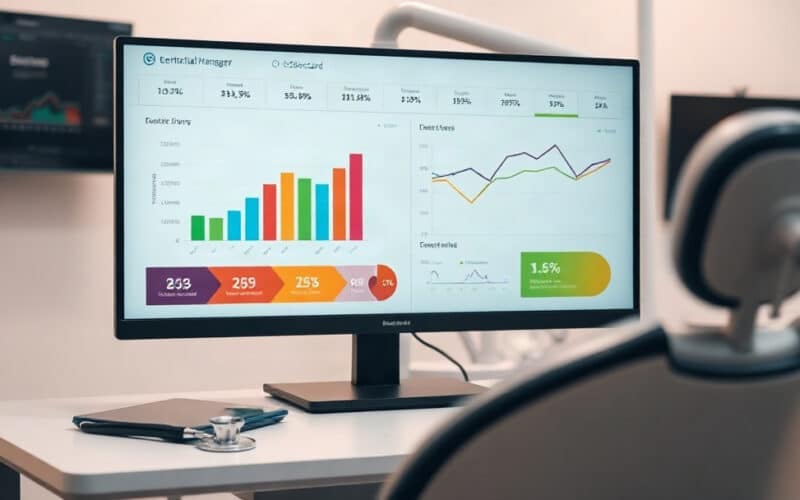
What Is a Dental Morning Huddle and Why Does It Matter?
A dental morning huddle is a brief, structured team meeting held before the first patient arrives, typically 15 minutes long, 5-15 minutes before doors open. Every member of the clinical and administrative team participates: the dentist(s), hygienists, assistants, and front office staff.
For related reading, see our guide on growing through patient retention.
The purpose is alignment, not information overload. By the time the huddle ends, every team member should know the day’s production goal, which patients have outstanding treatment, any scheduling vulnerabilities, and any patient notes that require special attention.
A survey of over 500 dental practices by Dental Economics found that practices conducting daily huddles consistently achieved 12-18% higher production per provider than practices that did not (Dental Economics, 2024). The reason is simple: when the team knows the goal and the patient’s clinical history before they walk in, every interaction is more intentional.
For related reading, see our guide on dental practice economics.
For related reading, see our guide on dental practice growth strategies.
For broader practice management context, see our article on effective growth strategies for dental practices.
For related reading, see our guide on efficient dental clinic management.
How Long Should a Dental Morning Huddle Be?
The ideal morning huddle runs 10-15 minutes. If yours regularly exceeds 20 minutes, it’s covering too much or lacks structure. The goal is to start the day energized and focused, not to hold a team meeting that bleeds into patient time.
Set a timer. Seriously. A visible countdown clock, whether on a laptop or a phone, signals that the huddle has a rhythm and that time is being respected. Teams that use a timer run shorter, more focused huddles.
Who Should Lead the Morning Huddle?
The office manager or lead scheduling coordinator typically facilitates the huddle, not the dentist. This keeps the meeting operationally focused and prevents it from becoming a clinical lecture. The dentist should contribute at key moments, flagging complex patients, noting clinical preferences, but should not dominate the conversation.
Rotate leadership quarterly so that multiple team members develop facilitation skills and stay engaged in the process.
The Complete Dental Morning Huddle Agenda Template
Use this as your starting point and adapt based on your practice’s specific needs:
Daily Morning Huddle Agenda: [Date]
Time: 8:45 AM (15 min before first patient) | Duration: 10-15 min
1. Production Check (2 min)
, Today’s scheduled production: $____
, Yesterday’s actual production: $____
, Month-to-date vs. goal: ____%
2. Schedule Walk-Through (5 min)
, Any holes in the schedule? Who is working to fill them?
. Which patients have confirmed? Unconfirmed?
. Any back-to-back complex cases the doc needs heads-up on?
3. Patient Flags (3 min)
, Outstanding treatment: Which patients have unscheduled treatment from previous visits?
, Balance due: Any patients with a balance who should be spoken to at checkout?
, Special notes: Anxious patients, medical alerts, VIP patients
4. Team Win / Recognition (1 min)
, Shout out one team member or patient experience from yesterday
5. Focus Word / Intention (30 sec)
, One word or theme for the day (optional but effective for culture-building)
What KPIs Should You Review in the Morning Huddle?
Not every metric belongs in a daily huddle, focus on leading indicators that the team can actually act on today:
1. Scheduled Production vs. Goal
Compare today’s scheduled production (from your PMS) against your daily production target. If you’re $800 short, the front desk knows to work the unscheduled treatment list or call the short-notice list to fill a gap.
2. Confirmation Rate
How many of today’s patients have confirmed? Target 90%+ confirmed by start of business. Any patient who hasn’t confirmed is a no-show risk, flag them for a morning call.
3. Unscheduled Treatment Value
For each patient on today’s schedule, pull their unscheduled treatment plan value. Review the top 3-5 patients with pending treatment and assign a team member to mention it at the appropriate time during their visit.
4. New Patient Count
How many new patients are scheduled today? New patients need a warm, coordinated welcome experience. Flag them so every team member who interacts with them knows it’s their first visit.
5. Hygiene Reappointment Rate (Weekly)
Review weekly rather than daily, what percentage of patients who completed hygiene last week left with their next appointment? Target 85%+. Any hygienist consistently below 80% needs coaching support.
How Do You Keep Team Members Engaged During the Huddle?
The fastest way to kill a morning huddle is to make it a one-way information download from the office manager to a passive audience. Engagement requires structured participation:
- Assign ownership. The hygienist presents their own schedule. The front desk lead presents the production numbers. The assistant highlights any instrument or supply needs. Everyone speaks.
- Ask, don’t tell. Instead of “We have three unconfirmed patients,” ask “Who’s going to call the three unconfirmed patients this morning?” Ownership shifts to the team, not the manager.
- Celebrate wins specifically. “Dr. Patel completed a full-arch implant case yesterday and the patient cried happy tears at checkout” lands differently than “good job yesterday, everyone.”
- Keep it standing. Literally. Standing huddles run shorter than seated meetings. No chairs in the huddle room (or huddle area) keeps energy high.
Downloadable Morning Huddle Checklist
Use this checklist format to standardize your huddle prep. The person facilitating the morning huddle should complete steps 1-4 the night before or first thing in the morning:
Pre-Huddle Prep Checklist
Complete before huddle begins:
- ☐ Pull today’s scheduled production total from PMS
- ☐ Compare to monthly production goal, calculate % to goal
- ☐ Identify any open appointment slots or schedule gaps
- ☐ Pull list of unconfirmed patients
- ☐ Flag patients with outstanding treatment balance or unscheduled treatment plans
- ☐ Note any medical alerts, patient preferences, or special circumstances
- ☐ Identify new patients and assign a greeter
- ☐ Prepare team win or recognition to share
During Huddle Checklist
- ☐ Start on time, no exceptions
- ☐ Each role presents their portion of the schedule
- ☐ Assign owners for each action item (unconfirmed calls, schedule gaps)
- ☐ Share team win
- ☐ End with energy, not administrative details
How Do You Handle Remote or Multi-Location Huddles?
For practices with multiple operatories across different floors, or DSO groups with multiple locations, virtual morning huddles via Zoom or Microsoft Teams can work effectively. Key adjustments:
- Use a shared digital whiteboard (Google Slides, Notion, or a PMS dashboard) so everyone sees the same data
- Keep cameras on. Audio-only huddles lose engagement rapidly
- Rotate “host” responsibility across locations to maintain investment
- Record the last 5 minutes if action items need documentation
What Results Should You Expect from a Consistent Morning Huddle?
Practices that implement and sustain a structured morning huddle typically report, within 60-90 days:
- 8-15% increase in same-day production from better schedule management
- Improved confirmation rates (2-5 percentage point increase)
- Higher unscheduled treatment conversion. Team is primed to have the conversation
- Stronger team cohesion and communication, especially across clinical and administrative lines
According to a case study published in the Journal of Dental Practice Management, one 3-doctor group practice attributed a 19% increase in monthly production over a 6-month period primarily to implementing a structured daily huddle paired with a same-day treatment protocol (JDPM, 2023).
Frequently Asked Questions
What time should a dental morning huddle start?
Typically 10-15 minutes before the first patient appointment. If your first patient is at 8:00 AM, start the huddle at 7:45-7:50 AM. This gives time to wrap up, get to operatories, and greet the first patient without rushing.
What if team members skip the morning huddle?
Attendance should be mandatory, not optional. Missing the huddle means missing critical patient information and production context. Address non-attendance directly in performance conversations, not by adjusting the huddle to accommodate late arrivals.
Should the dentist always attend the morning huddle?
Yes, the dentist’s presence signals that the huddle matters. Even if the dentist speaks for only 2 of the 15 minutes, their attendance sets the cultural tone. Delegating the huddle entirely while not attending undermines its authority.
How is a morning huddle different from a team meeting?
A morning huddle is operational and daily, focused on today’s schedule, patients, and production. A team meeting is strategic and periodic (monthly or quarterly): focused on systems, goals, performance trends, and team development. They serve different purposes and should not be conflated.
What software makes morning huddle data easier to pull?
Most PMS platforms have a “huddle report” or “daily schedule summary” that pulls production goals, patient flags, and outstanding treatment in one view. Dentrix has a Morning Huddle module; Eaglesoft has a Daily Huddle Report; Curve Dental and Open Dental both have dashboard views designed for this purpose. Third-party tools like Dental Intelligence, Dental Metrics, and Weave also offer huddle dashboards with real-time data.
For related reading, see our guide on essential dental practice technology.
For more resources on this topic, see our complete guide to dental practice management.