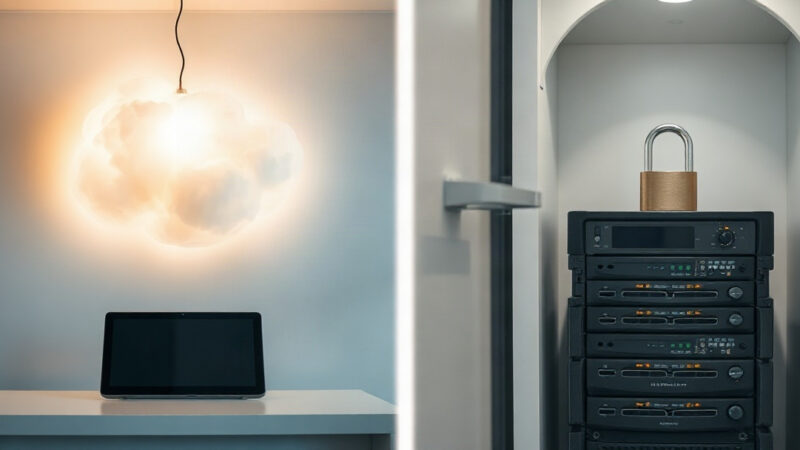
Curve Dental and Open Dental are the two most credible challengers to the Dentrix/Eaglesoft duopoly, and they represent opposite answers to the same question: what should a practice outsource? Curve is cloud-native and fully managed: Planet DDS’s counterpart Denticon aside, Curve itself is a separate company that sells hosting, backups, and updates as part of the subscription, so a practice trades control for convenience. Open Dental, since relicensing from open-source GPL to proprietary in version 24.4 (2024), is proprietary software you typically self-host (or have a third party host), with direct database access and published pricing, a practice trades some IT responsibility for control and cost transparency. Neither answer is universally right; the fit depends on whether a practice has (or wants) IT capability in-house. As of September 2026.
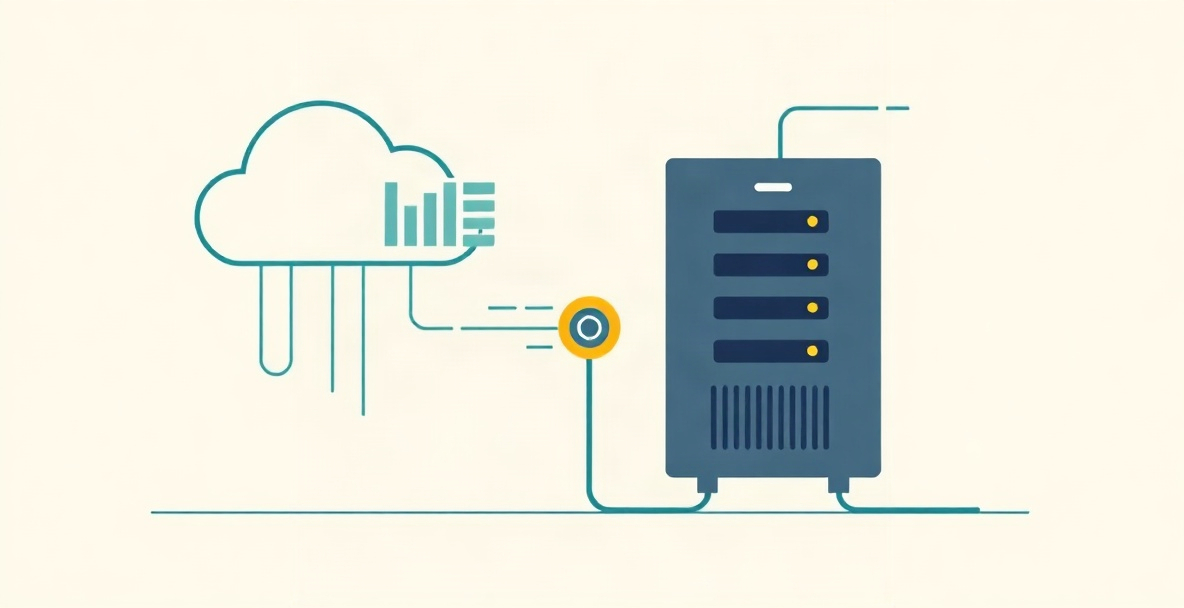
The Series Capstone: Control vs. Convenience
The live SERP for “curve dental vs open dental” is thin, as expected for a roughly 10-monthly-search keyword: a Reddit thread comparing Dentrix Ascend, Curve, and Open Dental; Curve Dental’s own blog post comparing itself to Open Dental (vendor-authored, ranking on its own domain); a Facebook group discussion; a Spiceworks IT-community thread; a marketing agency’s “5-point review”; and a G2 marketplace comparison page built from vendor-submitted profiles. None of it is independent, and most of it isn’t written by anyone who has run both platforms in a live practice. DPI has no referral relationship with Curve Dental (or its parent, Symplr) or Open Dental Software. See DPI’s editorial policy for how we handle vendor claims sitewide.
This is the fifth and final post in DPI’s five-part dental practice management software comparison series. The first four: Open Dental vs Dentrix, Dentrix vs Eaglesoft, Dentrix Ascend vs Dentrix, and Denticon vs Dentrix: all involved an incumbent, Dentrix, on one side of the table. This one doesn’t. Curve Dental and Open Dental are both challengers, and comparing two challengers to each other, rather than each to the incumbent, surfaces a different question: not “which platform beats Dentrix,” but “which philosophy about outsourcing fits your practice.” For the full 12-vendor category view, see DPI’s dental practice management software comparison.
Curve Dental vs Open Dental: Decision-Dimension Comparison
The table below uses the same seven-row structure this series has used throughout. Read it with one framing in mind: every row traces back to a single choice, who runs the infrastructure.
| Decision Dimension | Curve Dental | Open Dental | Why It Matters |
|---|---|---|---|
| Pricing model | Not published. Curve’s own pricing page offers only a “personalized quote” and a “get pricing” call-to-action. No dollar figures appear on its public site | Published: $199/month/location for the first 12 months, then $149/month/location, per Open Dental’s own fee schedule; volume discounts for 4-9 offices and prepay discounts (5-15%) are also disclosed | You can budget against a real number with Open Dental before ever taking a sales call. With Curve, you can’t comparison-shop until you’re already in a quote process |
| Ownership & license model | Proprietary SaaS; the practice licenses access to a Curve-run cloud environment and never touches the underlying infrastructure | Proprietary since version 24.4 (2024), changed from open-source GPL, per Open Dental’s own license page, but the company states “database access remains unchanged with the new license” and that “the database still remains more open than any other dental software on the market” | Open Dental is not open-source software today, and this post does not call it that. What differs from Curve is who holds the infrastructure and how directly you can reach your own data. License philosophy is the smaller distinction. See the row below |
| Data access | Data lives inside Curve’s managed cloud environment; a practice’s own materials point to “24/7 access to patient profile information” through the application, not a documented path to query the underlying database directly | Direct MySQL/MariaDB database access, documented ODBC connectivity, and a built-in query tool for custom reporting, per Open Dental’s own manual and license page | This is the sharpest real difference in the pair. Direct database access enables custom reporting, third-party analytics tools, and migration freedom that a mediated cloud platform doesn’t expose the same way |
| Deployment | Cloud-based, browser-accessed; Curve’s own site markets itself as the “#1 Ranked Cloud-Based Dental Software,” with hosting, backups, and updates handled by Curve | Server-based by default; self-hosting is standard, with third-party cloud hosting of an Open Dental install also available for practices that don’t want in-house hardware | Curve removes infrastructure management entirely. Open Dental assumes a practice has (or contracts) IT capability, or accepts a third-party hosting cost to approximate Curve’s convenience |
| Ecosystem & integrations | Curve maintains a named “Integration Partners” program and built-in cloud imaging, per its own site, though specific partner counts aren’t disclosed on its public integrations page | A large, long-established third-party ecosystem built around Open Dental’s open database access. Independent developers can query the database directly rather than working through a restricted API, per Open Dental’s own manual | Curve’s integrations run through a partner program Curve controls. Open Dental’s ecosystem is broader in practice because direct database access lowers the barrier for any developer to build against it |
| Staffing & hiring pool | Curve states it serves “over 80,000 dental professionals” across the U.S. and Canada (vendor claim, not independently verified by DPI), but the trained-user pool is still smaller than Dentrix’s | A long-running, community-supported user base with independent consultants and active user forums, per Open Dental’s own site, but also smaller than Dentrix’s installed base | Neither platform has Dentrix’s hiring pool. A practice adopting either one should expect more from-scratch training for new front-desk and clinical hires than it would with the market incumbent |
| Support model | Curve lists Implementation, Data Conversion, Data Management, Training, and Support as bundled managed services, plus live remote support, per its own site | Support fees are disclosed on Open Dental’s fee schedule (hourly and per-incident rates for training, queries, and after-hours support), supplemented by community forums and independent consultants | Curve bundles support into the subscription relationship. Open Dental itemizes it. You can see and choose what you pay for, but you’re also more exposed to a-la-carte costs if you need a lot of it |
Vendor claims sourced directly from Curve Dental’s pricing page (curvedental.com/pricing), homepage (curvedental.com), and about page (curvedental.com/about); Open Dental’s fee schedule (opendental.com/site/fees.html), license page (opendental.com/site/license.html), and user manual (opendental.com/manual), all fetched September 2026. No Curve Dental price appears in this table because Curve Dental does not publish one on its public site.
Data Access, in Concrete Terms
“Data access” is the row most comparison content flattens into a vague sentence, so it’s worth being specific about what it actually means day to day. With Open Dental, a practice (or its IT vendor) can connect a reporting tool, a business-intelligence dashboard, or a custom script directly to the underlying MySQL/MariaDB database and pull exactly the fields it needs, on its own schedule, without waiting on a vendor API or export tool, documented in Open Dental’s own manual as ODBC connectivity plus a built-in query tool. That same access matters again at practice sale or transition: a buyer’s due-diligence team, or a departing owner’s accountant, can query production and collections history directly rather than depending entirely on the seller’s own generated reports.
With a managed cloud platform like Curve, that access is mediated by design. The practice interacts with the application layer, not the database underneath it, and Curve’s own public materials describe access to “patient profile information” through the platform rather than a documented path to the raw database. That’s not a flaw; it’s the tradeoff for not having to run or secure that database yourself. But it means a practice’s ability to build custom reporting, connect a third-party analytics tool, or export a full data set on its own terms depends on what Curve exposes through its own interfaces and integration partner program, not on an open connection the practice controls.
Pricing Transparency as a Decision Factor
Open Dental publishes real numbers: $199/month/location for the first 12 months, then $149/month/location, with volume discounts for 4-9 offices and prepay discounts of 5% (6 months), 10% (1 year), or 15% (2-3 years), all per Open Dental’s own fee schedule, fetched September 2026. That figure covers primary support; eServices, imaging AI, training, and custom query work are itemized separately on the same page, so an all-in comparison requires adding the specific services a practice actually plans to use.
Curve Dental does not publish comparable figures anywhere on its public site as of this writing. Its pricing page offers only a “personalized quote” call-to-action. DPI checked curvedental.com directly for this post and found no published rate; quote-only is the accurate characterization, and no number is invented here to fill that gap. A practice evaluating Curve should request an itemized, multi-year quote in writing before comparing it against Open Dental’s published rate: a single-year number from either vendor can understate the real cost once support tiers, imaging modules, and per-provider fees are added.
Total Cost Over a Realistic Horizon
Self-hosted is not free, and this post won’t pretend otherwise. Running Open Dental on a practice’s own server means budgeting for server hardware (a one-time capital cost, refreshed every several years), backup infrastructure or a third-party backup service, and either in-house IT staff time or a contracted IT vendor to keep the server patched, secured, and available. Open Dental’s own fee schedule discloses hourly rates for related services, training, custom queries, replication support, after-hours support, that a self-hosting practice may draw on periodically, and those hours add up over a multi-year horizon in a way a single monthly subscription number doesn’t capture.
Curve’s subscription folds hosting, backups, and update management into the recurring fee, which is precisely the convenience the platform sells, a practice isn’t pricing out server refreshes or negotiating with an IT contractor. The honest comparison isn’t “Open Dental’s published $149-199/month vs. an unknown Curve number.” It’s Open Dental’s published software fee plus a realistic estimate of hosting, backup, and IT support for a practice’s specific situation, against Curve’s quoted all-in subscription for the same footprint. Because Curve doesn’t publish a number, that comparison can only be run by a practice that requests actual quotes from both and adds its own honest IT cost estimate to the Open Dental side. DPI won’t invent either figure here.
Business Continuity: Two Different Failure Modes
Cloud and self-hosted carry different risks, not different amounts of risk. A cloud platform like Curve means the practice’s clinical and scheduling data is unreachable if internet connectivity fails at the office, or if Curve’s own infrastructure has an outage. The practice has no local copy to fall back on, and recovery depends entirely on the vendor’s uptime and incident response. A self-hosted Open Dental install means the practice owns backup and disaster-recovery planning directly: if the server fails, hasn’t been backed up correctly, or the office loses power without adequate redundancy, the practice (or its IT vendor) is the one responsible for recovery, not a vendor’s operations team.
Neither risk profile is inherently worse, but they demand different mitigation. A Curve practice should confirm what offline or degraded-connectivity fallback exists for a same-day outage. An Open Dental practice should confirm its backup cadence, off-site or cloud backup redundancy, and a tested recovery plan are actually in place, not assumed. Open Dental’s own fee schedule listing “replication support” as a paid service is a reminder that this infrastructure work doesn’t happen automatically; someone has to set it up and maintain it.
Integration Ecosystems and the Imaging Question
Open Dental’s third-party ecosystem is broad in practice largely because of the same data-access advantage discussed above: independent developers can build against a documented, queryable database rather than a restricted vendor API, which historically has made Open Dental a common integration target for imaging systems, patient communication tools, and analytics platforms, per Open Dental’s own manual. Curve maintains a named integration-partner program and built-in cloud imaging as part of its platform, per its own site, though it does not disclose a specific partner count on its public integrations page. For imaging specifically, a practice evaluating either platform should confirm direct compatibility with its existing (or planned) sensor and imaging hardware before committing. DPI could not verify a complete compatibility list for either vendor from public pages alone, and a practice should request that list directly from whichever vendor it’s evaluating.
Who Each Suits
DPI isn’t declaring a winner. See the editorial policy link above for why any comparison that does deserves scrutiny. The honest sorting logic runs almost entirely on IT capability and appetite for infrastructure ownership:
- Curve Dental tends to fit a practice that wants zero IT responsibility, predictable subscription budgeting once a quote is in hand, and is comfortable with its data access being mediated through the vendor’s own application and integration partners.
- Open Dental tends to fit a practice with in-house IT capability or a reliable contracted IT vendor, that wants direct database access for custom reporting or eventual migration freedom, values published pricing it can budget against today, and is willing to own backup and disaster-recovery planning as part of that tradeoff.
- Neither is the default answer for a practice with a large existing team already trained on Dentrix: see this series’ first two posts, Open Dental vs Dentrix and Dentrix vs Eaglesoft, for that more common decision point.
Series Capstone: Which Comparison Fits Your Situation
This closes DPI’s five-part PMS comparison series. Rather than rehash all five, here’s a short map to the right one for a given situation:
- Single practice, on-premise incumbent vs. self-hosted challenger: Open Dental vs Dentrix.
- Single practice, choosing between two on-premise incumbents: Dentrix vs Eaglesoft.
- Weighing whether to move an existing Dentrix practice to the cloud: Dentrix Ascend vs Dentrix.
- Multi-location group or DSO evaluating centralized architecture vs. an on-premise fleet: Denticon vs Dentrix.
- Single practice or small group choosing between the two leading incumbent-independent challengers, on the control-vs-convenience axis: this post, Curve Dental vs Open Dental.
Across all five, the same discipline holds: DPI cites only what vendors publish themselves, flags vendor claims DPI hasn’t independently verified, and declines to invent pricing or specs that aren’t public. See DPI’s 12-platform PMS comparison for the full category view spanning all five products covered in this series plus the rest of the field.
Frequently Asked Questions
Is Open Dental still open-source?
No. Open Dental relicensed from open-source GPL to proprietary in version 24.4 (2024), per Open Dental’s own license page. The company states the change didn’t affect price, support, or database access, and that “the database still remains more open than any other dental software on the market”, but the software itself is proprietary today, not open-source.
Is Curve Dental or Open Dental cheaper?
There’s no verifiable answer, because Curve Dental doesn’t publish pricing. Open Dental publishes $199/month/location for the first 12 months, then $149/month/location, per its own fee schedule. Whether Curve ends up cheaper or more expensive depends on Curve’s actual quote plus what a practice would spend on self-hosting Open Dental (server, backup, IT support), request an itemized quote from Curve and compare it to that fuller Open Dental cost picture, not just the published software fee alone.
Does Open Dental’s direct database access matter if my practice doesn’t do custom reporting?
Less day to day, but it still matters at two points most practices don’t think about early: building any future integration a vendor hasn’t already built for you, and migrating or exporting data cleanly at a practice sale or platform switch. A cloud-mediated platform like Curve can still support both, but through the vendor’s own interfaces and partner program rather than a connection the practice controls directly.
What does Curve Dental’s subscription actually include?
Per Curve’s own site, its managed service bundles hosting, cloud-based imaging, and Implementation, Data Conversion, Data Management, Training, and Support as part of the relationship. Specific pricing for what’s included isn’t published, so a practice should request an itemized breakdown of what’s covered in the base subscription versus billed separately.
Why does this post follow four comparisons that all involved Dentrix?
Because Curve Dental and Open Dental are both challengers to the Dentrix/Eaglesoft duopoly rather than incumbents themselves, comparing them to each other, instead of each to Dentrix, surfaces the real decision a practice considering either one actually faces: how much infrastructure control to trade for convenience, not which platform beats the market leader.
Does DPI recommend Curve Dental or Open Dental?
No. DPI is editorially independent and has no referral relationship with Curve Dental, its parent company, or Open Dental Software. This guide compares the two on the dimensions that actually decide fit, data access, pricing transparency, deployment, and support model, so a practice owner can weigh their own IT capability and appetite for infrastructure ownership rather than treat this as a single recommended platform.