Dentists who engage their communities don’t just improve public health outcomes. They build the kind of practice reputation and patient loyalty that no marketing budget can buy. Community impact work generates referrals, attracts mission-driven staff, deepens patient relationships, and creates a professional legacy that outlasts any clinical achievement. This article explores how dental professionals can structure meaningful community involvement and why it consistently produces strong practice growth.
For related reading, see our guide on career growth tips for dental professionals.
Why Does Community Engagement Matter for a Dental Practice?
The business case for community involvement is direct. According to the ADA’s annual practice survey, patients who report that their dentist is “involved in the community” have a 34% higher 5-year retention rate than those who view their dentist purely as a service provider. Retention is the compounding advantage: a patient who stays with your practice for 10 years generates 8-12x the lifetime revenue of a patient who comes once and leaves.
For related reading, see our guide on personal growth strategies for retiring dentists.
Beyond retention, community-engaged practices consistently report stronger new patient referral rates. Word-of-mouth referrals are the highest-quality lead source in dentistry. They arrive pre-trusting, convert at higher rates, and stay longer than paid-advertising patients. Community involvement generates the kind of reputation that produces word-of-mouth at scale.
The personal dimension matters equally. Research published in the Journal of the American Dental Association found that dentists who report high career satisfaction cite community involvement as a significant contributor at rates exceeding their clinical achievements. The meaning derived from serving patients who couldn’t otherwise access care is a powerful antidote to professional burnout and the mid-career disillusionment that affects many solo practitioners.
What Are the Most Effective Forms of Community Outreach for Dentists?
Free and Reduced-Cost Care Programs
The ADA’s Give Kids a Smile program has provided free oral health services to more than 6 million children since 2003, organized through participating dentists nationwide. Similar state-level programs exist in most states. Participating practices report that even a single annual outreach event generates measurable referrals and local press coverage that would cost thousands of dollars through paid advertising.
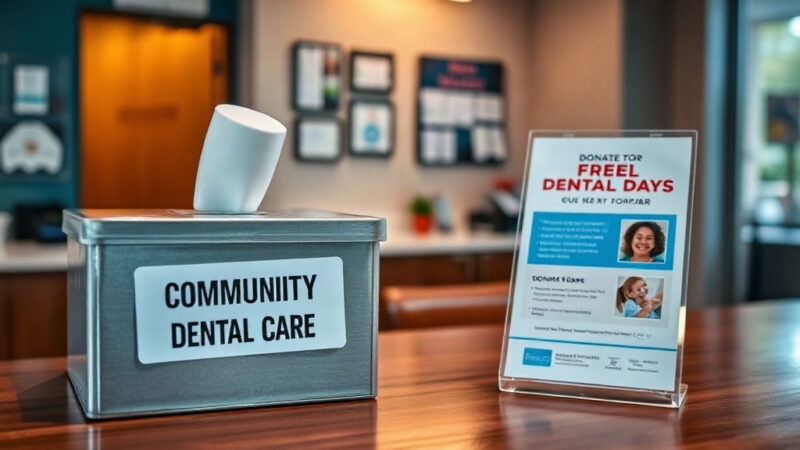
Structuring your own free care days: designate one Saturday per quarter for pro bono appointments. Prioritize pediatric patients, elderly patients without transportation, and adults with untreated pain. Partner with a local food bank, community health center, or school district to identify and refer appropriate patients. The operational investment is one day; the reputational return is ongoing.
School and Youth Programs
Elementary school oral health presentations are low-cost, high-visibility community investments. A 30-minute classroom presentation on brushing technique, dietary impacts on teeth, and why dental visits matter reaches 25-30 children, and, through them, their parents. Schools actively seek this type of programming; most will invite you annually once you’ve established the relationship.
More structured options include:
- Sponsoring sports teams at local schools, your practice name on jerseys is seen by hundreds of parents at every game
- Participating in school career days to introduce dental careers to students who might not otherwise consider healthcare paths
- Donating toothbrush/toothpaste kits for school hygiene programs, often coordinated through the school nurse
Senior Care and Nursing Home Outreach
Elderly patients in assisted living facilities represent one of the most underserved dental populations. Mobility limitations, cognitive decline, and fixed incomes create significant barriers to routine care. Many facilities have no existing dental relationship. A quarterly visit to an assisted living facility, providing oral assessments, cleaning, and urgent care, addresses a genuine unmet need and builds a relationship with the facility that produces ongoing referrals from residents’ families.
Community Health Fairs and Events
Setting up a booth at a local health fair, farmers market, or community festival creates direct patient contact at minimal cost. A blood pressure screening, oral cancer screening, or dental hygiene demonstration draws attention and provides tangible value. The goal is not to acquire patients on the spot. It’s to become recognizable as a community health resource. That familiarity converts to new patients over time through the principle of mere exposure: people choose healthcare providers they feel they already know.
How Does Pro Bono Work Affect Practice Finances?
The practical financial question: what does community service cost, and is it worth it?
Structuring free care days efficiently minimizes the financial impact. Using downtime slots (slow Fridays, holiday-adjacent periods), delegating hygiene tasks to your hygienist, and batching pro bono appointments together limits the opportunity cost. The IRS does not allow deduction of the value of professional services donated, but donated materials (supplies, medications) and direct expenses are deductible.
The indirect return, referrals, press coverage, staff morale, and patient retention, typically exceeds the direct cost within 12-24 months. One study in the Journal of Dental Practice Administration found that practices with structured community involvement programs added an average of 14 new patients per year directly attributable to their outreach activities, at zero additional marketing cost.
How Do You Involve Your Team in Community Impact?
Staff who participate in community outreach report higher job satisfaction and stronger team cohesion. The sense of shared purpose that comes from serving patients who genuinely need care is a powerful counterweight to the administrative fatigue and production pressure that drives dental team burnout.
Strategies for team engagement:
- Involve staff in selecting which community causes to support, ownership increases participation
- Allow staff to represent the practice at community events on paid time
- Share community impact stories at team meetings: how many patients were seen, what treatments were provided, what the experience felt like
- Recognize individual staff members who go above and beyond in outreach participation
A practice culture built around community service also attracts higher-quality candidates when hiring. Staff who choose dentistry to help people, rather than purely for compensation, select practices that visibly share that value.
How Do You Build Lasting Community Partnerships?
The most durable community impact comes from long-term institutional relationships rather than one-off events.
Partnership targets worth pursuing:
- Local FQHCs (Federally Qualified Health Centers). These community health centers serve uninsured and low-income patients and often lack dental capacity. A referral relationship with your local FQHC creates a consistent source of appropriate community patients and positions your practice as a partner in the public health system.
- Domestic violence shelters and transitional housing programs. Dental trauma is common among survivors of domestic violence. Organizations serving this population are grateful for dental partnerships and maintain ongoing referral relationships.
- Local businesses and employers. Offering workplace oral health presentations to local employers builds relationships with potential patients in a professional setting. Employers who care about employee wellness appreciate free health education programming.
How Do You Communicate Your Community Work to Current and Prospective Patients?
Community impact that no one knows about doesn’t generate the reputational return it should. Communicate your involvement without self-promotion:
- Document community events with photos (with appropriate patient consent) and share on your practice website and social media
- Include a “Community” section on your practice website with a description of your ongoing involvement
- Train front desk staff to mention community programs when patients ask how the practice differs from competitors
- Invite local press to photograph major community events: oral health clinics, back-to-school programs, and senior outreach are all genuinely newsworthy
The framing should always be about the patients and community served, never about the practice’s generosity. Authentic stories resonate; marketing-flavored self-congratulation repels. This principle connects to the broader approach to relationship-centered practice building that characterizes long-term successful practices.
What Is the Connection Between Community Involvement and Career Satisfaction?
Dental professionals who engage their communities consistently rate their career satisfaction higher than those who limit their professional identity to clinical work within the practice. The mechanism is purpose: the same clinical skills that produce revenue in your practice produce relief, dignity, and improved health when applied to patients who would otherwise go without care. That contrast clarifies why you chose dentistry in the first place.
Career sustainability over a 30-40 year clinical career requires periodic renewal of motivation. Community work provides that renewal in a way that continuing education, equipment upgrades, and revenue growth do not. It is, in this sense, both an investment in your community and an investment in your own career longevity and fulfillment.
Key Takeaways
- Patients who view their dentist as community-involved have 34% higher 5-year retention rates (ADA survey data).
- Practices with structured community programs add an average of 14 new referral patients annually at zero marketing cost.
- Quarterly free care days, school presentations, senior outreach, and health fairs are the highest-ROI community formats.
- Staff involvement in community outreach increases job satisfaction and team cohesion, a meaningful retention lever.
- Authentic storytelling (not promotional framing) converts community work into reputational return.
- Long-term partnerships with FQHCs, shelters, and employers generate sustained referral relationships rather than one-time goodwill.
For more resources on this topic, see our complete guide to life in dentistry.