Dental insurance verification is the process of confirming a patient’s active coverage, plan limitations, and remaining benefits before treatment, and it is the single highest-CPC term in DPI’s entire dental keyword dataset. DataForSEO’s live Google Ads pull (September 2026) puts “dental insurance verification” at a $118.43 CPC, more than triple the next-highest practice-side term and over 13× the average patient-acquisition keyword. That price is being paid almost entirely by insurance-verification software and outsourced revenue-cycle-management (RCM) vendors bidding for practices already in pain from denials and write-offs. This post is not another vendor landing page. It’s a genuine standard operating procedure: named roles, exact timing, the full field-capture table, escalation rules, and a documentation standard, that a front-desk hire can execute on day one.
What Is Dental Insurance Verification, and Why Does It Command a $118 CPC?
Dental insurance verification is the administrative process of confirming, before an appointment, that a patient’s dental plan is active, what it covers, and what it doesn’t: subscriber status, effective dates, remaining annual maximum, deductible status, coverage percentages by procedure category, frequency limitations, waiting periods, and provider network status. Done well, it turns a patient’s treatment plan into an accurate financial estimate before they ever sit in the chair. Done poorly, or skipped, it becomes the single most common source of preventable claim denials and unbudgeted write-offs in a fee-for-insurance practice.
The keyword data explains who’s searching and why. At $260 monthly search volume and $118.43 CPC (DataForSEO, Google Ads keyword data, United States, pulled September 2026), “dental insurance verification” is priced like an urgent B2B procurement term, not a consumer search. Because it is one. The bidders on that term are eligibility-verification SaaS platforms and outsourced RCM services, and they’re bidding that high because the buyer on the other end is a practice owner or office manager who has already felt the cost of a bad verification: a denied claim, a patient dispute over a “guaranteed” estimate, or a front desk drowning in phone hold time. This SOP is written for that reader: someone with an active, expensive problem, not someone casually browsing.
If you just need the fast version, a step-by-step checklist for reducing claim denials, see our companion guide, Dental Insurance Verification: Step-by-Step Checklist for Reducing Claim Denials. This SOP goes deeper: full timing rules, field capture, and escalation paths.
The Two-Touch Timing Rule
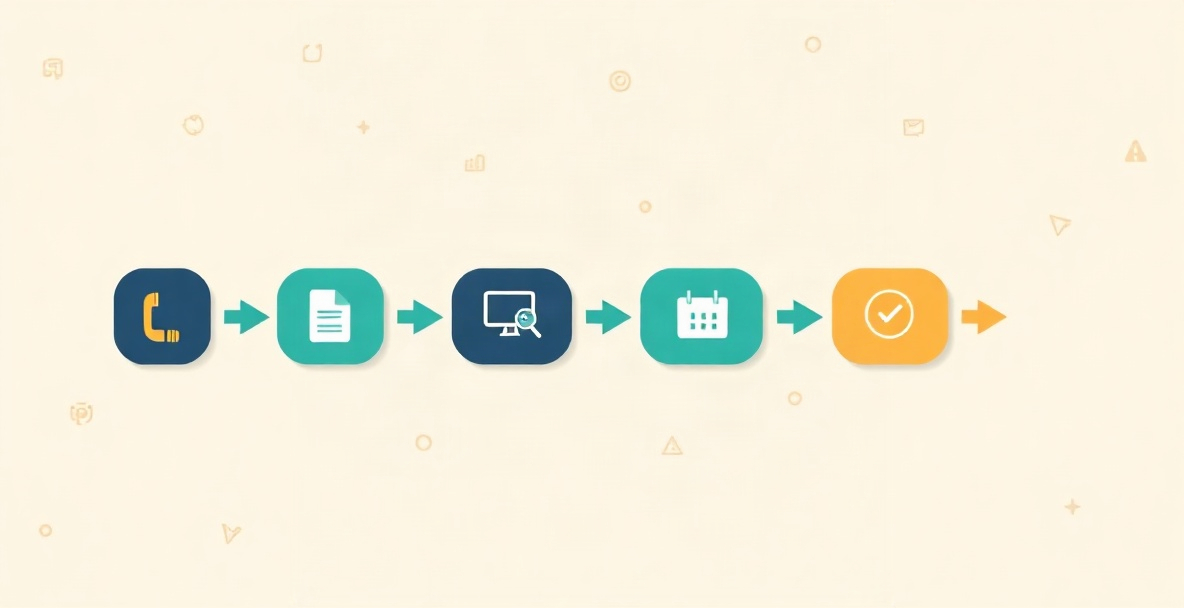
Verification isn’t a single event; it has to happen twice, and skipping the second touch is where most preventable write-offs originate. Coverage looks static from the patient’s side, but between the moment an appointment is booked and the moment the patient sits in the chair, real changes can occur: a plan year can flip and reset an annual maximum, a patient can switch employers or plans, an employer can change carriers mid-year, or benefits already used elsewhere can eat into the remaining maximum. A verification done two weeks out and never rechecked is a verification based on stale data by the time treatment happens.
| Touch | Timing | Purpose | Owner |
|---|---|---|---|
| Touch 1, Full Verification | 3-5 business days before the appointment | Complete benefits capture: eligibility, plan details, frequency history, remaining maximum, deductible status, network status for the treating provider | Insurance Coordinator / Verification Specialist |
| Touch 2, Eligibility Recheck | 1 business day before, or same-day for early-morning appointments | Confirm the plan is still active and the benefits captured in Touch 1 haven’t changed; flag any discrepancy before the patient is in the chair | Front Desk / Treatment Coordinator |
The recheck doesn’t need to repeat the full field-capture process. It needs to confirm active status and flag deltas against what Touch 1 already captured. A recheck that surfaces a lapsed plan or an exhausted maximum the morning of the appointment is far cheaper to handle than one discovered after the claim is filed.
The Field-Capture Table: What to Document on Every Verification
This table is the core of the SOP. Copy it into your practice management system’s verification template or your own tracking sheet, and require every field to be completed, not just the ones that are easy to find on a payer portal. The fields that get skipped most often (frequency limitations, downgrade provisions, provider-level network status) are exactly the ones that cause denials.
| Category | Fields to Capture | Why It Matters |
|---|---|---|
| Subscriber & Patient | Subscriber name & DOB, patient name & DOB, relationship to subscriber, member ID | Mismatches here are the single most common cause of an instant claim rejection |
| Payer & Plan | Payer name, plan name, group number, plan/policy number | Group number determines the specific plan design, two employees at the same employer can carry different group numbers with different benefits |
| Effective Dates | Coverage effective date, plan year start/renewal date | A plan year reset changes the annual maximum and resets frequency counters |
| Maximum & Deductible | Annual maximum, amount used, amount remaining; deductible amount, amount met, amount remaining | Directly determines the patient’s true out-of-pocket exposure for the planned treatment |
| Coverage Percentages | Preventive %, basic %, major % (as defined by the plan, not assumed from the ADA category) | Payers define “basic” and “major” differently, never assume a procedure’s category |
| Frequency Limitations | Bitewing X-ray frequency, prophylaxis (cleaning) frequency, periodontal maintenance frequency, exam frequency | A patient can have “coverage” for a procedure and still be denied because they exceeded the plan’s frequency limit |
| Plan Provisions | Waiting periods (and whether satisfied), missing tooth clause, downgrade/alternate benefit provisions (e.g., composite paid at amalgam rate) | These provisions silently reduce the payer’s contribution even when the procedure is nominally covered |
| Age Limits | Sealant age limit, orthodontic age limit (if applicable) | Common source of unexpected denials for adolescent and young-adult patients |
| Authorization | Pre-authorization required (yes/no), pre-auth reference number if obtained | Treating without a required pre-authorization is a frequent, entirely avoidable denial cause |
| Coordination of Benefits | Secondary carrier (if any), COB rule (standard vs. non-duplication), which plan is primary | Determines the sequence of billing and the patient’s actual remaining liability |
| Provider Network Status | In-network status for the specific treating provider under this plan, not just the practice’s tax ID | See the provider-level network trap below. This field is skipped constantly and is expensive when it’s wrong |
The Provider-Level Network Trap
This is the most expensive and most under-covered failure mode in dental insurance verification, and it deserves its own callout: a practice can be in-network with a payer while an individual associate dentist, or a hygienist working under general supervision, is not yet credentialed under that specific plan. Credentialing runs at the provider level, not the practice level. Each individual clinician has to be separately enrolled and approved by each payer, and that approval can lag weeks or months behind the date they start seeing patients.
When this gap exists and goes unverified, one of two expensive things happens: the claim is paid at the lower out-of-network rate even though the patient believed they were seeing an in-network provider, or the claim is denied outright pending credentialing verification. Either way, the practice absorbs the difference or has to go back to the patient after the fact, a conversation that damages trust regardless of who’s technically at fault. This is why the field-capture table above specifies verifying network status for the treating provider, and why practices that add associates, bring on new hygienists, or add specialists need a standing process for confirming each new clinician’s credentialing status with every major payer before they’re scheduled against that plan’s patients. DPI’s step-by-step dental insurance credentialing guide covers that enrollment process in detail; a forthcoming DPI piece will map the full credentialing workflow end to end, but that guide is not yet published as of this writing, so treat any forward reference to it as directional only.
Method Hierarchy: Portal, Clearinghouse, or Phone
Not all verification methods return the same information, and choosing the wrong one for the situation is its own source of gaps. Use this hierarchy to match the method to what you actually need to confirm.
| Method | Speed | Depth | Reliability Notes |
|---|---|---|---|
| Payer Portal | Fastest (seconds to minutes) | Eligibility and plan basics; often lacks frequency history and detailed provisions | Good first stop for every verification, but rarely sufficient on its own for a complete check |
| Clearinghouse (270/271 Real-Time Eligibility) | Fast (near real-time) | Structured eligibility response; depth varies by payer’s 271 response completeness | Efficient at volume, but the 271 response is only as detailed as what the payer chooses to return. Frequency and provision data is inconsistent across payers |
| Phone Call to Payer | Slowest (hold time plus call duration) | Deepest: a representative can confirm frequency history, provisions, and provider-specific network status directly | Costs real staff time; always capture a reference number, representative name, and call date/time (see documentation standard below) |
A practical default: run the portal or clearinghouse check first for speed, then escalate to a phone call whenever the plan is unfamiliar, the treatment plan is high-dollar, frequency history isn’t returned electronically, or the patient’s stated coverage doesn’t match what the portal shows.
Documentation Standard: What to Record and Where
Every verification, portal, clearinghouse, or phone, needs a documented record with, at minimum: the date and time of the check, the method used, the name of the payer representative (for phone verifications), a reference or confirmation number, and every field from the capture table above. Store this in the patient’s account in your practice management system, not in a separate spreadsheet or sticky note, so the treatment coordinator and biling team can find it later without re-verifying.
The standing rule to enforce with every team member: a verbal quote from a payer representative is not a guarantee of payment. Nearly every payer discloses this directly on their verification calls. Benefits are quoted subject to the patient’s eligibility and the terms of the plan at the time the claim is actually processed, not at the time of the phone call. Documentation is the practice’s only real protection when a claim comes back different from what was quoted: a reference number and a recorded representative name give you something to escalate against in an appeal. A remembered phone call gives you nothing.
Handoff to Treatment Planning and the Patient Conversation
Verification only creates value if the resulting estimate actually reaches the patient before treatment starts, and reaches them from someone positioned to have the conversation well. The treatment coordinator (or whoever presents the treatment plan) should receive the completed verification record before the patient’s appointment, not scramble to look it up while the patient is already checked in.
When presenting the estimate, frame it honestly as an estimate, not a guarantee: language like “based on the benefits your plan reported, your estimated portion is approximately $X, though your insurance company’s final payment can vary” sets the right expectation without undermining confidence in the practice. Skipping this framing, or presenting a verification-based number as a fixed price, is one of the most reliable ways to damage case acceptance: patients who feel misled by a number that changes after the fact don’t just dispute that invoice, they hesitate on the next treatment recommendation too. Bad verification doesn’t just create accounts-receivable problems. It quietly erodes trust in every future estimate the practice gives that patient.
Failure Modes and Escalation Rules
Verification will fail sometimes even with a disciplined process. What matters is having a decision rule ready rather than improvising at the front desk with a patient waiting.
| Failure Mode | What’s Happening | Decision Rule |
|---|---|---|
| Coverage unverifiable at chair time | Payer system down, no response before the appointment, or plan not found | Present the treatment as self-pay/estimate-pending, get financial consent in writing, and complete verification retroactively before submitting the claim |
| Plan terminated | Recheck (Touch 2) shows the plan lapsed since scheduling | Notify the patient before treatment begins; offer self-pay, a payment plan, or rescheduling once new coverage is confirmed |
| Benefits exhausted | Annual maximum already used, or frequency limit already met for the planned procedure | Present full patient responsibility in writing before treatment; do not proceed on the assumption remaining benefits will “probably” be available |
| Patient disputes the estimate | Patient’s own understanding of their coverage conflicts with the verification | Show the documented verification record (date, method, reference number) and offer to conference-call the payer together if the patient wants to challenge it directly |
Ownership, Volume, and Quality Assurance
Assign verification to a named role, an insurance coordinator or verification specialist for Touch 1, and the front desk or treatment coordinator for Touch 2, rather than leaving it as a shared responsibility nobody clearly owns. At higher appointment volume, that role may need to be split across more than one person, or supported by a clearinghouse subscription that reduces the manual portal-checking load per patient.
Build in a small recurring audit: pull a sample of completed verifications each week or month and check the estimate given to the patient against what the payer actually paid. Three KPIs are worth tracking on an ongoing basis:
- Verification completion rate before appointment: the share of scheduled appointments with a completed Touch 1 verification on file before the visit
- Estimate accuracy: how closely the patient-facing estimate matched the payer’s actual payment, tracked over the audit sample
- Claim denial rate attributable to eligibility: the share of denials specifically coded to eligibility, coverage, or authorization issues, isolated from denials caused by coding or documentation problems elsewhere in the billing process
None of these numbers is meaningful as a one-time snapshot; the value is in tracking them over successive audit cycles and treating a worsening trend as a signal to retrain, reassign, or reconsider the verification method mix above.
Build vs. Outsource vs. Software
Given the $118.43 CPC vendors are paying to reach exactly this decision, it’s worth addressing directly and without a sales pitch: DPI doesn’t endorse specific verification software or RCM vendors, and a practice’s right answer depends on volume and internal bandwidth, not on which vendor bought the ad.
- In-house is usually right for practices with steady, moderate appointment volume where a dedicated (or partially dedicated) insurance coordinator can keep pace with Touch 1 and Touch 2 without falling behind, and where the practice wants full control over the documentation standard and the patient conversation.
- Clearinghouse/real-time-eligibility software earns its cost once portal-hopping across many payers becomes the bottleneck. It doesn’t replace the phone-call depth this SOP calls for on complex cases, but it can meaningfully cut the time cost of Touch 1 and Touch 2 at volume.
- Outsourced verification or full RCM services tend to make sense when a practice is short-staffed, adding locations faster than it can hire and train verification specialists, or has a denial rate high enough that a specialized outside team can plausibly improve it faster than an internal hire-and-train cycle would. The trade-off is losing some direct control over the patient conversation and documentation standard, so any outsourced arrangement should still be held to this SOP’s field-capture and documentation requirements, not the vendor’s own lighter-weight default.
Whichever path a practice chooses, the SOP itself: the two-touch timing, the field-capture table, the documentation standard, and the escalation rules, should stay in the practice’s own control and survive a vendor change intact.
Where This Fits Into DPI’s Insurance Coverage
This SOP complements DPI’s broader guidance on reducing insurance dependency and pairs directly with the step-by-step verification checklist already published on DPI, which is a faster quick-reference version of the field-capture and timing process detailed here. For the provider-level network trap covered above, see DPI’s dental insurance credentialing guide. Future DPI coverage will compare in-network and out-of-network economics in more depth and map the full credentialing workflow end to end. Neither is published as of this writing, so treat any reference to that future coverage as directional only.
Frequently Asked Questions
How far in advance should you verify dental insurance?
Run full verification 3-5 business days before the appointment, then recheck eligibility 1 business day before (or same-day for early appointments) to catch any changes that occurred after the initial check.
Why does dental insurance verification need to happen twice?
Because coverage can change between scheduling and the appointment: a plan year can reset, an employer can switch carriers, or benefits used elsewhere can reduce the remaining maximum. A single check done too far in advance can be stale data by the time the patient is in the chair.
What is the provider-level network trap in dental insurance verification?
A practice can be in-network with a payer while an individual associate or hygienist isn’t yet credentialed under that specific plan, since credentialing is granted per provider, not per practice. If that gap isn’t checked, the claim can pay out-of-network or get denied pending credentialing, even though the patient believed they were seeing an in-network clinician.
Is a verbal insurance quote a guarantee of payment?
No. Payers routinely disclose that benefits quoted by phone or portal are estimates only, subject to the patient’s actual eligibility and plan terms at the time the claim is processed. That’s why documenting the reference number, representative name, and call date is the practice’s real protection if a claim comes back different from the quote.
Should a dental practice verify insurance in-house or outsource it?
It depends on volume and staffing, not on which option a vendor is advertising. In-house verification works well when a dedicated coordinator can keep pace with both touches; clearinghouse software earns its cost once portal-checking becomes the bottleneck; and outsourcing tends to make sense for short-staffed practices or ones with a denial rate high enough that a specialized outside team can improve it faster than an internal hiring cycle.
What should be documented for every insurance verification?
At minimum: the date and time of the check, the method used (portal, clearinghouse, or phone), the payer representative’s name (for phone calls), a reference or confirmation number, and every field in the practice’s field-capture table: subscriber and plan details, maximum and deductible status, coverage percentages, frequency limitations, plan provisions, and provider-level network status.